
What’s a cover crop?
What is a "cover crop"? Why do we do it? And why is it mixed species?
A cover crop is when a paddock is sown during the 'off-season' between cash crops. Multiple species are used for biodiversity and often each species is chosen to address soil health concerns. Eg. Legumes to fix nitrogen, tap roots to break up compaction. And weeds are nature's way of healing so they add to the diversity.
In a conventional cropping system, once a crop is terminated (eg. Harvested, baled, grazed, sprayed out with herbicide) the paddock is kept 'fallow' for several months until the next crop is sown. To achieve this, either tillage is needed or herbicide is sprayed at regular intervals, sometimes both.
Here are just a few benefits of growing a cover crop:
Improve soil structure
Improve organic matter
Increase biodiversity
Living plant using carbon dioxide via photosynthesis
Livestock feed (only if needed)
Nutrient cycling
Soil less vulnerable to erosion from rain and wind
Better water infiltration
Flowering plants for attracting pollinators
Less or no herbicide use
Less reliance on fertiliser inputs
Less crop disease and insect pressure
Less man/tractor hours, less diesel etc
This is why cover crops are a hallmark of regenerative agriculture. As we look after the landscape we can improve the health of the soil and in turn improve the health of the animals and plants, and ultimately us.
For us here it's not about the quantity of grain harvested, but the quality produced as we use the grain grown here in our hen and pig feed supplements, and graze our crops with livestock.
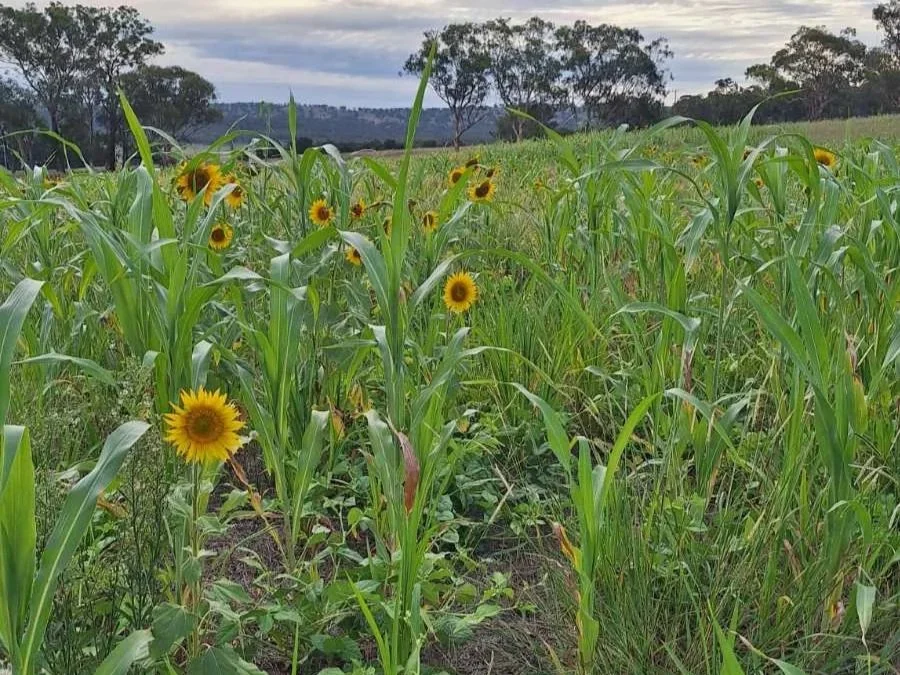
Photo of a mixed crop here which is holding on nicely despite the recent hot dry conditions.
